Nigerian businesses send millions of emails every month, yet most land in spam folders or get deleted without a second glance.
The difference between email campaigns that generate sales and those that waste resources often comes down to following proven best practices tailored to the Nigerian market.
While you may already understand what email marketing is and why it’s important for your Nigerian business, executing effective campaigns requires navigating unique local challenges: strict spam filters from Nigerian ISPs, mobile-first audiences, trust issues with promotional emails, and evolving data protection expectations.
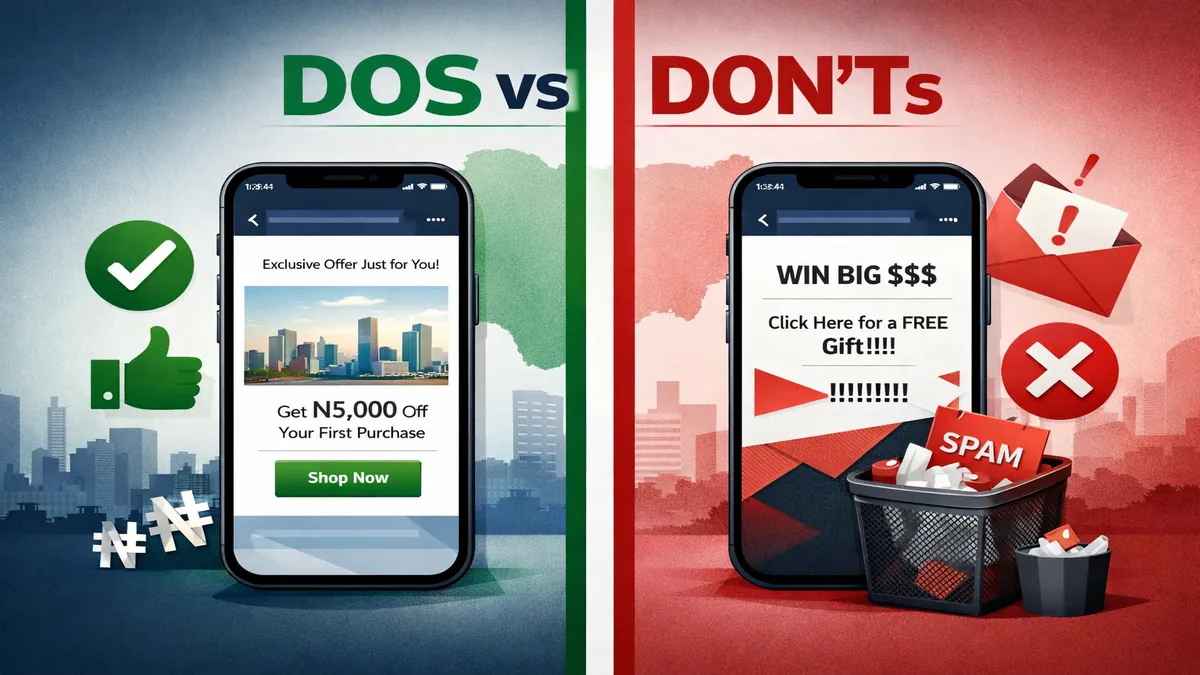
This guide outlines the critical dos and don’ts of email marketing specifically for Nigerian businesses — practical strategies that improve deliverability, engagement, and conversions in our local market.
The DOs of Email Marketing in Nigeria
DO Build Your List Organically with Nigerian Audience in Mind
Why it matters here: Nigerian consumers are increasingly aware of data privacy, and purchased email lists typically contain outdated contacts or people who never consented to hear from you.
Best practice:
- Add clear signup forms to your website with specific value propositions (“Get N5,000 off your first order”)
- Collect emails at physical locations (stores, events) with explicit consent
- Use lead magnets relevant to Nigerian pain points (e.g., “Free Guide: How to Save 40% on Data Costs”)
- Leverage social media contests that require email registration
- Always use double opt-in to verify genuine interest and improve list quality
Local example: A Lagos-based fashion retailer grew their list from 200 to 8,000+ in six months by offering a “Style Guide for Nigerian Professionals” as a lead magnet, then segmenting subscribers based on gender and style preferences.
DO Optimize Every Email for Mobile Devices
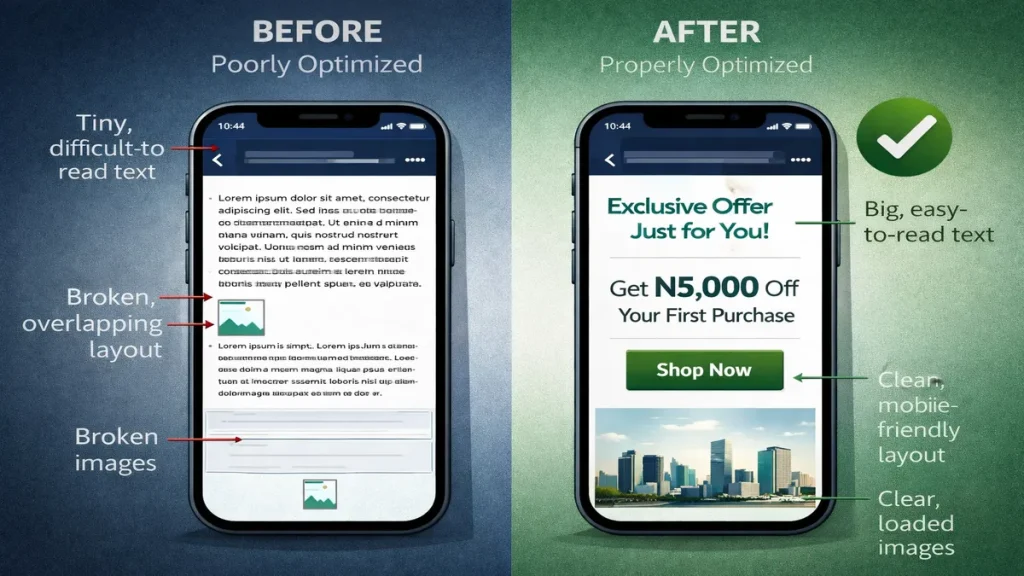
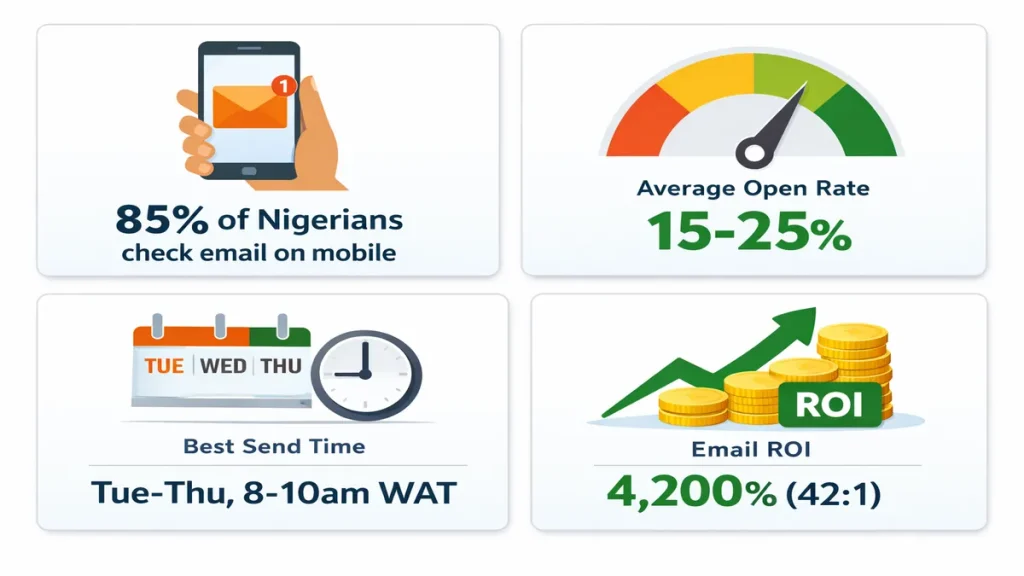
Why it matters here: Over 85% of Nigerian internet users access email primarily on smartphones. Your beautiful desktop design means nothing if it’s unreadable on a Tecno or Infinix device.
Best practice:
- Use responsive email templates that adapt to screen sizes
- Keep subject lines under 40 characters (mobile screens truncate longer ones)
- Use single-column layouts
- Make buttons at least 44×44 pixels (easy thumb-tapping)
- Test on multiple devices before sending, including budget Android phones
- Keep file sizes small — many Nigerians manage limited data bundles
Mobile-first tip: Preview text (the snippet shown after the subject line) is crucial on mobile. Use it strategically to reinforce your subject line and increase open rates.
DO Segment Your Audience Based on Nigerian Customer Behaviors
Why it matters here: A subscriber in Lagos has different needs than one in Kano. A first-time buyer needs different messaging than a loyal customer. Generic mass emails achieve poor results.
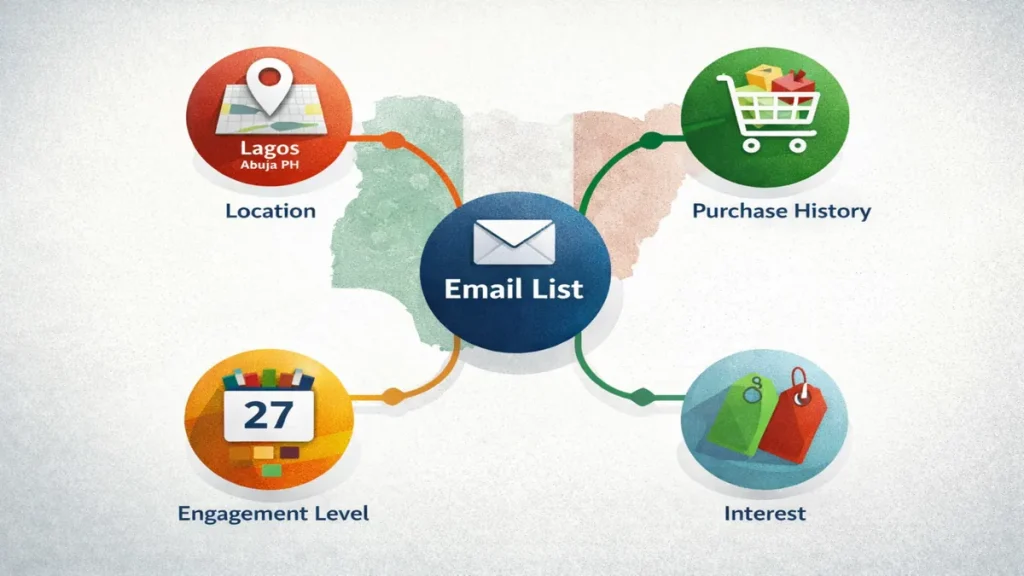
Best practice:
- Segment by location (delivery times and logistics vary significantly across states)
- Segment by purchase history (new customers vs. repeat buyers)
- Segment by engagement level (active readers vs. dormant subscribers)
- Segment by product interest or category
- Create segments based on where customers are in their buying journey
Nigerian context: If you run an ecommerce store, separate customers in Lagos, Abuja, and Port Harcourt into different segments. Send location-specific promotions acknowledging different delivery timelines or highlighting pickup options in each city.
DO Personalize Beyond Just Using Names
Why it matters here: Nigerian consumers respond strongly to personalized experiences that show you understand their specific situation and needs.
Best practice:
- Use purchase history to recommend relevant products
- Send birthday or anniversary emails with special offers
- Reference past interactions or browsing behavior
- Acknowledge customer milestones (“You’ve been with us for one year!”)
- Tailor content to customer preferences and stated interests
- Use dynamic content blocks that change based on recipient data
Advanced personalization: “Hi Chidi, we noticed you viewed our Samsung Galaxy phones last week. We just restocked, and customers in Enugu can now get same-day delivery.”
DO Write Subject Lines That Respect Nigerian Communication Culture
Why it matters here: Nigerian email users are bombarded with scam emails, making them skeptical. Your subject line must quickly establish legitimacy and value.
Best practice:
- Be specific and benefit-focused: “Your order ships tomorrow” beats “Shipping update”
- Use numbers and specifics: “Save N15,000 this weekend only”
- Create urgency without being deceptive: “Last 24 hours for early bird pricing”
- Ask relevant questions: “Still looking for reliable hosting in Nigeria?”
- Avoid ALL CAPS and excessive punctuation (!!!!) — spam signals
- Test A/B variations to see what your Nigerian audience responds to
What works locally:
- Price-focused subject lines perform well (“Now N12,500 — was N18,000”)
- Scarcity and exclusivity resonate (“For VIP customers only”)
- Problem-solution formats (“Tired of slow internet? We have a solution”)
DO Send Emails at Optimal Times for Nigerian Audiences
Why it matters here: Send timing dramatically affects open rates. Nigerian work schedules, commute patterns, and internet usage habits differ from Western markets.
Best practice:
- Test different send times and track performance
- Generally strong times: Tuesday-Thursday, 8-10am or 1-3pm (WAT)
- Avoid Monday mornings (inbox overload) and late Fridays
- Consider your specific audience — B2B vs. B2C timing differs
- Account for weekend email behavior (lower engagement for professional content)
- Use time zone settings correctly if targeting multiple regions
Nigerian insight: Many professionals check personal emails during lunch breaks or their evening commute. Ecommerce brands often see strong engagement between 7-9pm when people are relaxing at home browsing on their phones.
DO Maintain Consistent Branding and Sender Identity
Why it matters here: Trust is crucial in the Nigerian market. Inconsistent sender names or branding triggers suspicion.
Best practice:
- Always send from the same recognizable sender name (e.g., “Yorochim Apex” not “[email protected]”)
- Use a professional “from” email address ([email protected], not gmail)
- Keep your email design consistent with your website and brand colors
- Include your logo in a prominent position
- Maintain a consistent sending schedule so subscribers know when to expect you
- Use the same tone and voice across all communications
DO Include Clear, Compelling Calls-to-Action
Why it matters here: Nigerian email recipients need clear direction on what to do next. Ambiguous CTAs result in lost conversions.
Best practice:
- Use one primary CTA per email (occasionally one secondary)
- Make buttons stand out visually (contrasting colors, adequate size)
- Use action-oriented text: “Shop Now,” “Claim Your Discount,” “Download Free Guide”
- Place CTAs above the fold and repeat at the bottom for longer emails
- Make the value crystal clear: “Get Started Free” vs. just “Sign Up”
- Link the entire button area, not just the text
DO Monitor and Act on Email Metrics
Why it matters here: Data tells you what’s working with your specific Nigerian audience. Assumptions lead to wasted budget.
Best practice:
- Track open rates (industry benchmark for Nigeria: 15-25%)
- Monitor click-through rates (good CTR: 2-5%)
- Watch unsubscribe rates (concerning if above 0.5% per campaign)
- Measure conversion rates and revenue per email
- Identify your best-performing subject lines, send times, and content types
- Use insights to continuously improve future campaigns
Local benchmark: If your open rates are below 12-15% consistently, you likely have deliverability issues or irrelevant content. Nigerian businesses with well-maintained lists and targeted content often achieve 25-35% open rates.
DO Provide Genuine Value in Every Email
Why it matters here: Nigerian consumers are selective about which emails they engage with. Pure promotional content gets ignored or marked as spam.
Best practice:
- Follow the 80/20 rule: 80% valuable content, 20% promotional
- Share helpful tips, industry insights, or exclusive information
- Educate your audience about your products/services
- Offer early access, insider deals, or VIP treatment
- Tell compelling stories that resonate with Nigerian experiences
- Solve problems your audience actually faces
Content ideas for Nigerian businesses:
- “5 Ways to Spot Fake Products Online in Nigeria”
- “How to Track Your Order Safely Across Lagos”
- “Rainy Season Care Tips for Your Electronics”
The DON’Ts of Email Marketing in Nigeria
DON’T Buy or Rent Email Lists
Why it hurts you: This is the fastest way to destroy your sender reputation in Nigeria. Purchased lists contain:
- People who never consented to hear from you
- Outdated or invalid email addresses (high bounce rates)
- Spam traps that will blacklist your domain
- Recipients who will immediately mark you as spam
The consequence: Nigerian ISPs (and global ones like Gmail serving Nigerian users) will quickly identify your emails as spam, meaning even your legitimate subscribers won’t receive future emails.
What to do instead: Build your list organically, even if it’s slower. A list of 500 engaged subscribers who actually want to hear from you is infinitely more valuable than 50,000 purchased contacts who mark you as spam.
DON’T Ignore the National Data Protection Regulation (NDPR)
Why it matters here: Nigeria’s NDPR requires explicit consent for collecting and using personal data, including email addresses. Non-compliance risks fines and reputational damage.
What you’re doing wrong if:
- You don’t have clear privacy policies explaining data usage
- You’re adding people to lists without their explicit consent
- You don’t provide easy unsubscribe options
- You’re sharing subscriber data with third parties without consent
- You don’t secure subscriber data properly
What to do instead:
- Add clear consent checkboxes to signup forms
- Include your privacy policy link
- Make unsubscribe prominent in every email
- Store data securely
- Honor unsubscribe requests immediately
DON’T Send Emails Without Permission (Even If You Have Someone’s Address)
Why this is different in Nigeria: Many Nigerian businesses think that having someone’s business card or a transaction history gives them permission to add contacts to marketing lists. It doesn’t.
The problem:
- Damages trust and your brand reputation
- Results in high spam complaints
- Violates NDPR regulations
- Creates negative associations with your brand
What to do instead: If you collect email addresses offline or through purchases, send a welcome email asking contacts to confirm they want marketing emails, explaining what they’ll receive and how often.
DON’T Use Deceptive Subject Lines or Sender Names
Why it’s worse here: Nigerian email users are already hyper-vigilant about scams. Deceptive practices instantly destroy trust and get you blacklisted.
Examples of what NOT to do:
- Subject: “Re: Your order” (when there’s no actual order)
- Subject: “You won!” (when they didn’t enter any contest)
- Sender: “Nigerian Bank” (when you’re not a bank)
- Subject: “Urgent account issue” (creating false urgency)
- Disguising promotional emails as personal correspondence
The consequence: High spam complaints, poor engagement, damaged brand reputation, and potential legal issues.
DON’T Neglect Email Design and Formatting
Why it matters here: Poorly designed emails signal unprofessionalism and get deleted quickly by Nigerian recipients who associate bad design with scams.
Common design mistakes:
- Walls of text with no paragraph breaks
- Tiny fonts that require zooming on mobile
- Broken images or missing alt text
- Misaligned elements and broken layouts
- Too many fonts, colors, or design elements
- No clear visual hierarchy
What to do instead: Use professional email templates, test thoroughly across devices, keep designs clean and scannable, and ensure your emails look polished and trustworthy.
DON’T Send Too Frequently (or Too Rarely)
Why balance matters in Nigeria: Over-emailing leads to unsubscribes and spam complaints. Under-emailing means subscribers forget who you are.
Too frequent:
- Daily promotional emails (unless subscribers specifically opted in for this)
- Multiple emails per day
- Sending without regard to subscriber engagement levels
- Not segmenting by engagement (sending the same frequency to everyone)
Too rare:
- Going months without contact
- Only emailing when you want to sell something
- Inconsistent scheduling that creates no expectation
What to do instead: Most Nigerian businesses find success with 1-4 emails per month for promotional content, with higher frequency acceptable for content-rich newsletters or ecommerce updates that subscribers specifically requested. Set and maintain a consistent schedule.
DON’T Ignore Unsubscribes or Make Them Difficult
Why this backfires: When people can’t easily unsubscribe, they mark you as spam instead — which is far worse for your sender reputation.
What NOT to do:
- Hide the unsubscribe link in tiny text or match it to background colors
- Require login to unsubscribe
- Make people explain why they’re leaving (optional feedback is fine)
- Take more than 1-2 clicks to complete unsubscription
- Continue sending emails for weeks after unsubscribe
- Require email confirmation to unsubscribe
What to do instead: Include a clear unsubscribe link in every email footer, process requests immediately (within 24 hours), and respect the decision without guilt-tripping.
DON’T Use “No-Reply” Email Addresses
Why it damages trust in Nigeria: Nigerian consumers value two-way communication. No-reply addresses signal you don’t care about feedback or questions.
The problems:
- Reduces trust and engagement
- Prevents valuable customer feedback
- Makes your brand seem impersonal and unapproachable
- Hurts deliverability (spam filters favor addresses that accept replies)
- Violates customer service best practices
What to do instead: Use addresses like hello@, support@, or team@ that route to a monitored inbox. Even if you can’t respond to every reply, monitoring gives you valuable customer insights.
DON’T Send Emails Without Testing First
Why this is critical in Nigeria: Technical issues that work fine in testing might fail in the Nigerian environment (slow connections, specific devices, email clients).
What to test:
- How emails render on popular email clients (Gmail, Yahoo, Outlook)
- Mobile display on various Android devices (most common in Nigeria)
- Loading time on slower connections
- All links and CTAs actually work
- Images display correctly (and alt text shows if they don’t)
- Personalization tokens populate correctly
- Unsubscribe link functions properly
Testing process: Send test emails to yourself and colleagues, check spam score using tools, and review across multiple devices before sending to your full list.
DON’T Neglect Your Email List Hygiene
Why this matters locally: Nigerian email lists degrade quickly due to people changing jobs, abandoning email addresses, or disengaging. A bloated list with inactive contacts hurts your metrics and costs you money.
List hygiene mistakes:
- Never removing bounced email addresses
- Keeping subscribers who haven’t engaged in 12+ months
- Not identifying and removing spam trap emails
- Ignoring clear signals of disengagement
- Not re-engaging dormant subscribers before removal
What to do instead:
- Remove hard bounces immediately
- Run re-engagement campaigns for inactive subscribers (6+ months no opens)
- Remove those who don’t respond to re-engagement
- Regularly validate email addresses for accuracy
- Segment and suppress non-engaged users from regular campaigns
DON’T Copy International Email Strategies Without Localization
Why Nigerian context differs: What works in the US or UK won’t necessarily work here due to different cultural norms, purchasing behavior, economic realities, and digital infrastructure.
Examples of misapplied strategies:
- Referencing holidays or seasons that aren’t relevant (Black Friday works; Thanksgiving doesn’t)
- Using pricing psychology that doesn’t resonate (e.g., .99 pricing less effective in Nigeria)
- Assuming high-speed internet and instant page loads
- Ignoring local payment method preferences (bank transfer, USSD, cash on delivery)
- Using humor or cultural references that don’t translate
What to do instead: Study how successful Nigerian brands communicate, understand local consumer behavior, reference familiar contexts, and adapt international best practices to fit the Nigerian market reality.
Common Mistakes Nigerian Businesses Make
The “Broadcast Everything” Approach
Many Nigerian businesses treat email like SMS — blasting every message to their entire list regardless of relevance. A subscriber who bought skincare products doesn’t need emails about your new laptop inventory.
Impact: Low engagement, high unsubscribe rates, wasted sending capacity.
Solution: Implement basic segmentation from day one. Even simple segments (location, product category, purchase vs. non-purchase) dramatically improve results.
Focusing Only on Sales, Never on Value
Nigerian brands often send nothing but “Buy now!” emails with no relationship building or value provision between promotions.
Impact: Subscriber fatigue, being perceived as spam, low brand affinity.
Solution: Implement a content calendar that includes educational content, tips, behind-the-scenes stories, and customer features alongside promotional emails.
Ignoring Deliverability Fundamentals
Many Nigerian businesses don’t realize their emails aren’t reaching inboxes. They see low open rates and assume disinterest, when actually their emails are landing in spam.
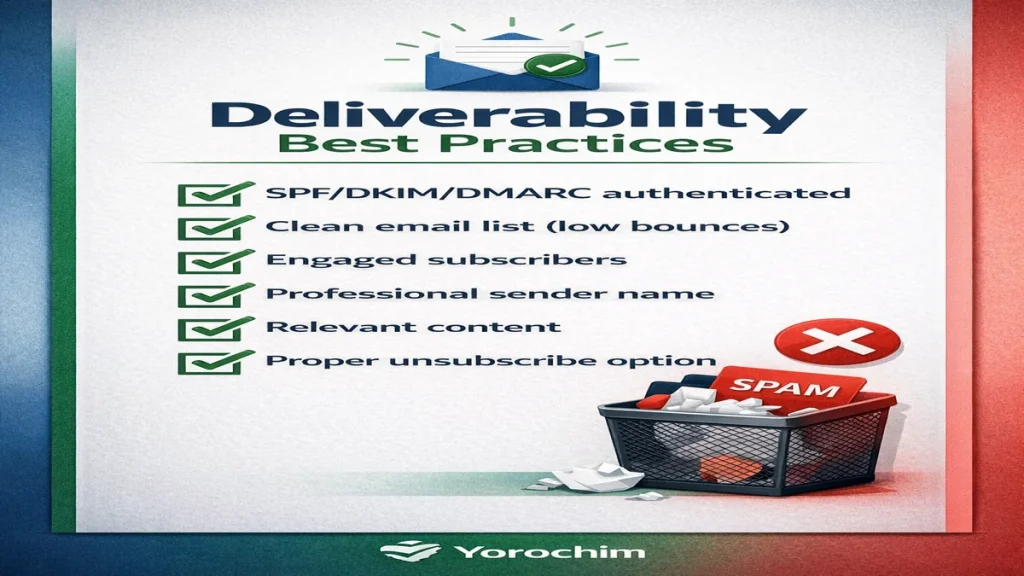
Common deliverability mistakes:
- Not authenticating emails (SPF, DKIM, DMARC records)
- Using shared IP addresses with poor reputation
- High bounce rates from not cleaning lists
- Too many spam complaints from irrelevant sending
- Using spam trigger words excessively
Solution: Work with reputable email service providers, authenticate your domain properly, maintain list hygiene, and monitor deliverability metrics closely.
Treating All Subscribers Identically
Sending the same message to a first-time visitor and a customer who’s made ten purchases shows a lack of sophistication that Nigerian consumers notice.
Impact: Irrelevant messaging, missed conversion opportunities, customer dissatisfaction.
Solution: Create customer journey email sequences that deliver different messages based on where someone is in their relationship with your brand.
Not Tracking the Right Metrics
Many Nigerian businesses celebrate high open rates while ignoring the metrics that actually matter: clicks, conversions, and revenue.
What matters more:
- Click-through rate (are people interested enough to click?)
- Conversion rate (are clicks becoming sales/leads?)
- Revenue per email (what’s the actual ROI?)
- List growth rate (are you building your asset?)
- Engagement over time (is quality increasing or decreasing?)
Solution: Connect your email platform to your analytics and ecommerce systems. Track the complete customer journey from email open to purchase.
Best Practices That Improve Deliverability & Conversions Locally
Authenticate Your Email Domain Properly
Set up SPF, DKIM, and DMARC records for your domain. This tells email providers that emails from your domain are legitimate, significantly improving inbox placement rates.
Why it matters in Nigeria: With the high volume of scam emails, ISPs serving Nigerian users are increasingly strict. Proper authentication is no longer optional.
Use a Recognizable Nigerian Phone Number in Your Footer
Include a Nigerian phone number (preferably with WhatsApp) in your email footer. This local touch builds trust and provides an alternative contact method for recipients who prefer calling or messaging.
Reference Local Payment Methods and Delivery Options
When sending transactional or ecommerce emails, prominently feature payment methods Nigerians prefer (bank transfer, USSD, Paystack, Flutterwave) and realistic delivery timelines for their location.
Leverage Social Proof From Nigerian Customers
Include testimonials, reviews, or case studies from Nigerian customers. Seeing that other Nigerians have successfully purchased and been satisfied builds confidence.
Create Mobile-First Purchase Flows
When your email CTA leads to a landing page, ensure that page loads quickly on mobile and has a streamlined checkout process. Lengthy forms or slow-loading pages lose conversions.
Use Progressive Profiling to Gather Data
Instead of asking for lots of information upfront, collect data gradually over multiple interactions. Start with just email, then gather more details in subsequent emails or through their browsing behavior.
Implement Win-Back Campaigns for Dormant Subscribers
Before removing inactive subscribers, send a targeted re-engagement campaign: “We miss you! Here’s 20% off to come back” or “Should we keep sending emails?” Give people a clear choice.
A/B Test Systematically
Test one variable at a time (subject line, send time, CTA placement, image vs. no image) and let data guide decisions rather than assumptions about what Nigerian audiences want.
When to DIY vs. Hire a Professional Email Marketing Consultant
You Can DIY If:
- You have a small list (under 1,000 subscribers)
- You’re sending basic newsletters or simple promotional campaigns
- You have time to learn email marketing platforms and best practices
- Your business has simple segmentation needs
- You have technical resources to set up authentication and integrations
- You’re comfortable analyzing data and making optimization decisions
You Should Hire Professional Help When:
- You’re not seeing ROI from your current email efforts despite consistent sending
- You don’t have time to manage strategy, content creation, design, and analysis
- You need sophisticated automation sequences (welcome series, cart abandonment, re-engagement)
- You’re losing revenue to poor deliverability or technical issues
- You want to scale email marketing but lack the internal expertise
- You need integration between email, CRM, and ecommerce platforms
- You require data-driven optimization based on Nigerian market performance
The Strategic Advantage of Working with Specialists
Email marketing executed poorly wastes resources and damages your brand. Executed well, it becomes your highest-ROI marketing channel — but that requires Nigerian market expertise, technical knowledge, strategic thinking, and consistent optimization.
As a specialized email marketing consultant serving Nigerian businesses, Yorochim Apex helps companies move from sporadic, ineffective email blasts to strategic, revenue-generating campaigns. We handle everything from technical setup and list building to content creation, automation, and performance optimization — all tailored specifically to how Nigerian consumers engage with email.
Whether you’re an ecommerce brand trying to reduce cart abandonment, a B2B service provider nurturing leads, or an SME building customer relationships, professional email marketing delivers measurable returns when strategy and execution align with local market realities.
Our approach combines comprehensive digital marketing strategy with specialized email expertise, ensuring your email campaigns integrate seamlessly with your broader marketing goals and customer journey.
Conclusion
Email marketing success in Nigeria isn’t about sending more emails — it’s about sending smarter, more targeted, and more valuable emails to people who actually want to hear from you.
By following these dos and don’ts, you’ll build trust with Nigerian subscribers, improve deliverability, increase engagement, and ultimately drive more revenue from your email marketing efforts. The businesses that win in this channel are those that respect their subscribers’ time and inbox, provide genuine value, and consistently execute best practices adapted to our local market.
Start by implementing just 2-3 of these practices this month. Audit your current approach against this checklist. Test, measure, and optimize continuously. Whether you manage email marketing in-house or partner with specialists who understand the Nigerian market, these fundamentals remain constant.
Ready to transform your email marketing results? Yorochim Apex specializes in helping Nigerian businesses build profitable email marketing systems that drive consistent revenue. Let’s discuss your email marketing strategy and explore how we can help you achieve measurable results.
FAQs FOR EMAIL MARKETING BEST PRACTICES NIGERIA
For Nigerian businesses, the best email service providers (ESPs) are those with strong deliverability rates to Nigerian ISPs, affordable pricing in accessible currencies, and reliable uptime despite local internet challenges. Top options include:
Mailchimp – Offers a free tier for up to 500 subscribers, user-friendly interface, and accepts international payment methods. Good for beginners and small businesses.
Sendinblue (Brevo) – Provides competitive pricing with SMS integration, which is valuable in Nigeria where multi-channel communication works well. Better deliverability to Nigerian inboxes than some competitors.
Mailerlite – Cost-effective option with strong automation features and a generous free plan. Works well for Nigerian ecommerce businesses.
ConvertKit – Excellent for content creators, bloggers, and digital product sellers. Strong segmentation capabilities.
Key considerations for Nigerian businesses:
- Accepts payment via international cards or PayPal
- Provides reliable customer support (ideally with chat support during Nigerian business hours)
- Offers mobile-responsive templates (crucial for Nigeria’s mobile-first audience)
- Has strong deliverability reputation with Gmail and Yahoo (most common in Nigeria)
- Provides authentication setup support (SPF, DKIM, DMARC)
Avoid very cheap or unknown ESPs, as they often have shared IP addresses with poor sender reputations, causing your emails to land in spam folders regardless of content quality.
Improving open rates for Nigerian subscribers requires understanding local behavior patterns and trust factors:
Subject Line Strategies:
- Lead with specific benefits: “Save N15,000 on data bundles this week” outperforms vague “Great deals inside”
- Use numbers and naira amounts: Nigerian subscribers respond well to specific pricing
- Create urgency authentically: “24 hours left” or “Only 10 slots remaining”
- Ask relevant questions: “Still struggling with slow delivery in Lagos?”
Timing Optimization:
- Send Tuesday-Thursday between 8-10am or 1-3pm WAT when professionals check emails
- Avoid Monday mornings (inbox overload) and late Fridays
- Test evening sends (7-9pm) for B2C audiences who browse on mobile after work
Sender Trust Signals:
- Use a consistent, recognizable sender name (your business name, not “noreply”)
- Include your sender name in subject line occasionally: “Chidi from [YourBrand]: Quick question…”
- Reference previous interactions: “About your recent order…” or “Following up on…”
List Quality:
- Remove subscribers who haven’t opened in 6+ months (they hurt your sender reputation)
- Send re-engagement campaigns before removing dormant contacts
- Focus on engaged subscribers rather than list size
Personalization:
- Use first names when you have them (but only if data is accurate)
- Segment by location and reference their city/state
- Reference past purchases or browsing behavior
Nigerian subscribers are particularly responsive to localized content, so mentioning specific cities, local payment options, or Nigerian-specific challenges significantly improves opens.
Yes, email marketing is one of the most cost-effective digital marketing channels for small Nigerian businesses, delivering an average ROI of 42:1 (N42 for every N1 spent) when executed properly.
Why it works for small budgets:
Low entry costs:
- Many ESPs offer free plans (up to 500-2,000 subscribers)
- No paid advertising required to reach your existing subscribers
- One person can manage email marketing part-time
- Templates eliminate design costs
Owned audience:
- Unlike social media where you don’t own your followers, your email list is yours
- Not affected by algorithm changes (unlike Facebook/Instagram)
- Direct access to customers’ inboxes
Measurable results:
- Track exactly which emails drive sales
- See what content resonates with your audience
- Calculate precise ROI for each campaign
Realistic budget breakdown for small Nigerian businesses:
- Email service provider: N0-N15,000/month (depending on list size)
- Design (if outsourced): N5,000-N20,000 for template setup (one-time)
- Content creation: Can be done in-house
- Total monthly investment: N0-N20,000
Revenue potential: A small fashion retailer in Lagos with just 800 subscribers sending 2 emails monthly can realistically generate N200,000-N500,000 monthly revenue from email campaigns promoting new arrivals, flash sales, and exclusive offers.
Getting started with minimal budget:
- Use a free ESP tier while building your list
- Create one simple welcome sequence
- Send one value-focused email weekly
- Promote one product/service monthly
- Track which emails drive sales and do more of what works
The key is consistency and quality over quantity. Small businesses often outperform larger competitors in email because they can be more personal, responsive, and authentic with their audience.
Building a quality email list in Nigeria requires multiple strategies deployed consistently. Here’s a practical roadmap:
Website Signup Forms:
- Add prominent signup forms on your homepage, about page, and blog posts
- Offer specific value: “Get N5,000 off your first order” or “Free shipping on your first purchase”
- Use exit-intent popups that trigger when visitors are about to leave
- Keep forms simple (email and first name only initially)
Lead Magnets That Work in Nigeria:
- Discount codes (10-20% off first purchase)
- Free guides: “How to Choose Authentic [Your Product] in Nigeria”
- Exclusive early access to sales or new products
- Free consultation or needs assessment
- Checklists, templates, or resources relevant to your industry
Social Media Integration:
- Run contests requiring email signup (“Follow us, tag 3 friends, and sign up to win”)
- Add “Sign up for exclusive offers” in Instagram/Facebook bio
- Create valuable content on social, then gate the full version behind email signup
- Share email-exclusive content snippets to encourage signups
Offline Collection:
- Collect emails at physical stores with incentive (“Sign up for 15% off today”)
- Gather emails at events, markets, or trade shows
- Use QR codes on receipts, flyers, or packaging linking to signup page
- Add signup sheets at checkout (with clear consent language)
Content Marketing:
- Write helpful blog posts that solve Nigerian customer problems
- Add “Subscribe for more tips” CTAs within content
- Create downloadable resources (PDFs, checklists) requiring email
Partnerships:
- Cross-promote with complementary Nigerian businesses
- Guest blog on relevant sites with CTA to your email signup
- Collaborate on giveaways requiring email registration
What NOT to do:
- Never buy email lists (terrible deliverability, damages sender reputation)
- Don’t add people without explicit permission
- Avoid complicated signup forms (asking too much information upfront)
Growth timeline expectations:
- Month 1-3: 50-200 subscribers (with consistent effort)
- Month 4-6: 200-500 subscribers (as systems optimize)
- Month 7-12: 500-1,500+ subscribers (with momentum)
Focus on quality over quantity. 300 engaged subscribers who actually want to hear from you will generate more revenue than 3,000 uninterested contacts who mark you as spam.
Nigerian businesses face specific deliverability challenges. Here are the main reasons emails land in spam and how to fix them:
1. Lack of Email Authentication
- Problem: Your domain isn’t verified, so email providers don’t trust you
- Solution: Set up SPF, DKIM, and DMARC records (your ESP provides instructions, or ask your web developer)
- Impact: Can improve inbox placement by 20-30%
2. High Bounce Rates
- Problem: Sending to invalid or outdated email addresses
- Solution: Remove hard bounces immediately, validate emails at signup, clean your list quarterly
- Nigerian context: Email addresses change frequently as people switch jobs or abandon accounts
3. Spam Complaints
- Problem: Recipients marking your emails as spam
- Solution: Only email people who explicitly opted in, make unsubscribe easy, send relevant content
- Threshold: Even 0.1% complaint rate (1 in 1,000) can trigger spam filtering
4. Spam Trigger Words and Formatting
- Problem: Using words/phrases associated with scams
- Avoid: “FREE!!!”, “URGENT ACTION REQUIRED”, “You’ve won”, “Click here now!!!”, excessive CAPS, multiple exclamation marks
- Nigerian context: Avoid anything resembling the common scam email language prevalent in the region
5. No Clear Sender Identity
- Problem: Using “noreply@” or unfamiliar sender names
- Solution: Send from recognizable business name
6. Poor Sender Reputation
- Problem: Your domain/IP address has history of spam-like behavior
- Causes: Sending too much too fast (to a new list), high bounce rates, spam complaints
- Solution: Warm up new domains gradually, maintain list hygiene, monitor engagement
7. Purchased or Scraped Email Lists
- Problem: Sending to people who never gave permission
- Solution: Never buy lists; build organically only
- Impact: Almost guaranteed spam folder placement and potential blacklisting
8. Low Engagement Rates
- Problem: If recipients consistently don’t open your emails, ISPs assume they’re unwanted
- Solution: Send to engaged subscribers, remove inactive contacts, improve content relevance
- Nigerian insight: Segment by engagement level and reduce frequency to dormant subscribers
9. Misleading Subject Lines
- Problem: Subject doesn’t match email content
- Example: Subject says “Your order confirmation” but it’s a promotional email
- Solution: Be honest and transparent in subject lines
10. Too Many Links or Large Images
- Problem: Spam emails often have excessive links or large files
- Solution: Limit to 2-3 links per email, optimize images for mobile, keep email under 100KB
- Nigerian mobile context: Large emails take longer to load on mobile data
How to check if you’re in spam:
- Send test emails to Gmail, Yahoo, and Outlook accounts you control
- Use mail-tester.com to check spam score before sending campaigns
- Monitor your ESP’s deliverability reports
- Ask engaged subscribers: “Are you receiving our emails?”
Prevention checklist: ✓ Authenticate your domain ✓ Only email confirmed opt-ins ✓ Clean your list regularly ✓ Use professional sender name and email address ✓ Write honest subject lines ✓ Make unsubscribe easy and obvious ✓ Send valuable, relevant content ✓ Monitor engagement and remove inactive subscribers
The optimal email frequency for Nigerian businesses depends on your industry, audience, and content quality, but here are evidence-based guidelines:
General Best Practice: 2-4 emails per month
This frequency keeps you top-of-mind without overwhelming subscribers. It works well for most Nigerian SMEs, service providers, and B2B businesses.
Frequency by Business Type:
Ecommerce/Retail:
- Promotional emails: 2-4 per month
- New product launches: As they occur (don’t hold back if you have news)
- Transactional emails: As needed (order confirmations, shipping updates)
- Best practice: Send more during high-purchase seasons (December, back-to-school, payday periods)
B2B/Professional Services:
- Newsletter/value content: 1-2 per month
- Educational content: 2-4 per month
- Sales outreach: Strategic timing based on prospect engagement
- Avoid: Weekly emails unless providing extremely high-value content
Content Creators/Bloggers:
- Content updates: Weekly or bi-weekly
- Promotional: 1-2 per month
- Nigerian context: Your audience expects regular content, so weekly can work if content quality remains high
Daily Deal/Flash Sale Businesses:
- Daily emails: Acceptable IF subscribers explicitly opted in for daily deals
- Requirement: Each email must contain genuine, time-sensitive value
- Risk: High unsubscribe rates if deals aren’t compelling
Warning Signs You’re Sending Too Often:
- Unsubscribe rate above 0.5% per campaign
- Open rates declining over time
- Increasing spam complaints
- Subscribers tell you it’s too much
Warning Signs You’re Not Sending Enough:
- Subscribers forget who you are when you do email
- High unsubscribe rates when you finally send (they forgot they subscribed)
- Competitors staying top-of-mind while you’re invisible
Nigerian-Specific Timing Considerations:
Payday Periods (25th-5th of month):
- Nigerians have more purchasing power right after salary
- Increase frequency slightly during this window
- Send promotional emails 27th-3rd for best conversion
Month-End:
- Consider reducing frequency 15th-25th when budgets are tight
- Focus on value content rather than heavy promotions
Religious Observances:
- Reduce promotional emails during Ramadan (for Muslim-majority audiences)
- Avoid aggressive sales emails on Sundays (for Christian-majority audiences)
- Send thoughtful, value-focused content during religious periods
Practical Framework:
Week 1: Value/educational content email Week 2: No email (or send only if you have news) Week 3: Promotional email with genuine offer Week 4: Product spotlight or customer success story
Advanced Strategy: Segment by Engagement Level
Highly engaged subscribers (open 60%+ of emails):
- Can receive 4-8 emails monthly
- They want to hear from you more
Moderately engaged (open 20-60%):
- Send 2-4 emails monthly
- Standard frequency
Low engagement (open <20%):
- Send 1-2 emails monthly
- Focus on re-engagement or consider removing
The Golden Rule: Quality always beats quantity. One highly relevant, valuable email monthly is better than four mediocre promotional blasts weekly.
Test and optimize:
- Start conservative (2 emails/month)
- Monitor unsubscribe rates, open rates, and revenue
- Gradually increase frequency if metrics remain healthy
- Let data guide your decisions for your specific Nigerian audience
Remember: The best frequency is the one that maximizes engagement and revenue for YOUR specific audience, not a one-size-fits-all number.