
If you’re a Nigerian business owner, you’ve probably heard about email marketing. Maybe you’ve received promotional emails from Jumia, Konga, or your bank. But what exactly is email marketing, and why should your business care about it?
This comprehensive guide breaks down everything you need to know about email marketing in simple terms, with examples relevant to Nigerian businesses.
What Is Email Marketing?
Email marketing is a digital marketing strategy where businesses send commercial messages to a group of people via email. These messages can include promotional offers, product updates, newsletters, event invitations, educational content, or personalized recommendations.
Think of email marketing as having a direct communication channel with your customers, right in their inbox. Unlike social media posts that might get lost in crowded feeds, emails land directly where your customers check regularly.
Email Marketing Meaning in Simple Terms
To put it simply, email marketing means using email to promote your products or services, build relationships with customers, and keep your business top-of-mind. It’s like having a conversation with your customers, but through their email inbox instead of face-to-face.
For Nigerian businesses, email marketing represents one of the most cost-effective ways to reach customers who have already shown interest in what you offer.
Want expert help implementing email marketing for your business?
Learn how a professional email marketing consultant can accelerate
your results → Best Email Marketing Consultant Nigeria
How Does Email Marketing Work?
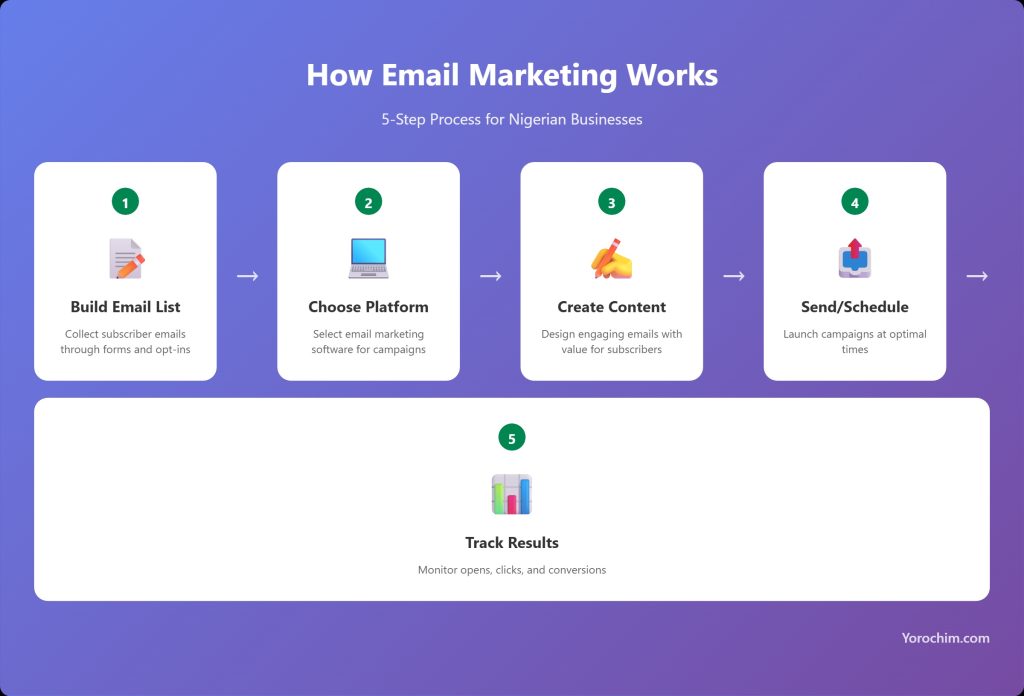
Understanding email marketing basics starts with knowing how the process works. Here’s a simple breakdown:
Step 1: Build Your Email List
You collect email addresses from people who are interested in your business. This could be through website signup forms, in-store registrations, social media lead generation, or events.
Step 2: Choose an Email Marketing Platform
You use email marketing software like Mailchimp, Sendinblue, or GetResponse to manage your contacts and send emails. These platforms help you design professional emails without needing technical skills.
Step 3: Create Your Email Content
You craft messages that provide value to your subscribers. This could be special offers, helpful tips, product launches, or company updates.
Step 4: Send and Schedule
You send emails to your list, either immediately or schedule them for optimal times when your Nigerian audience is most likely to check their inbox.
Step 5: Track Results
You monitor open rates, click rates, and conversions to see what’s working and improve future campaigns.
Why Email Marketing Matters for Nigerian Businesses
Many Nigerian entrepreneurs wonder if email marketing is worth the effort, especially when platforms like WhatsApp and Instagram seem more popular. The answer is a resounding yes, and here’s why.
1. You Own Your Audience
Unlike social media where algorithm changes can reduce your reach overnight, your email list belongs to you. If Instagram or Facebook changes its rules tomorrow, your email subscribers remain accessible.
2. Higher ROI Than Other Channels
Email marketing delivers an average return of ₦40 for every ₦1 spent, according to global marketing data. For Nigerian businesses operating on tight budgets, this exceptional return on investment makes email marketing one of the smartest marketing choices.
3. Direct Communication Channel
Emails land directly in your customer’s inbox. While your social media post might reach only 5% of your followers due to algorithm limitations, emails reach everyone on your list who hasn’t unsubscribed.
4. Professional Brand Image
Having a structured email marketing strategy positions your Nigerian business as professional and established. When customers receive well-designed, valuable emails from you, it builds trust and credibility.
5. Perfect for Mobile Users
Over 80% of Nigerians access the internet primarily through mobile devices. Modern email marketing platforms ensure your emails look great on smartphones, making it easy for your customers to read and act on your messages.
6. Personalization Opportunities
Email marketing allows you to address customers by name, send birthday offers, recommend products based on past purchases, and segment your audience for targeted messaging. This level of personalization is harder to achieve on social media.

Real Examples of Email Marketing in Nigeria
Let’s look at how successful Nigerian businesses use email marketing:
Nigerian Banks
First Bank, GTBank, and Access Bank regularly send account updates, fraud alerts, promotional offers for loans, and financial tips via email. These emails keep customers informed and engaged with banking services.
E-commerce Platforms
Jumia sends personalized product recommendations, flash sale announcements, abandoned cart reminders, and exclusive discount codes to email subscribers. Konga uses email to notify customers about deals during Black Friday and other shopping events.
Fintech Companies
Paystack, Flutterwave, and Piggyvest send onboarding emails to new users, transaction notifications, educational content about financial management, and feature update announcements.
SMEs and Local Businesses
A Lagos-based fashion designer might send a weekly newsletter showcasing new designs, a Port Harcourt restaurant could email special menu items and reservation reminders, and an Abuja beauty salon might send appointment confirmations and skincare tips.
Educational Institutions
Universities and training centers use email marketing for admission updates, course announcements, student newsletters, and alumni engagement.
These Nigerian businesses see results because they have clear email
strategies. We’ve helped 50+ Nigerian SMEs implement email marketing
that drives real revenue. See How We Can Help Your Business →
Email Marketing vs Social Media Marketing in Nigeria
Both channels are valuable, but they serve different purposes for Nigerian businesses.
Email Marketing Strengths:
- Direct access to interested customers
- Higher conversion rates for sales
- Better for detailed information and long-form content
- Professional communication channel
- Owned audience that platforms can’t take away
- Excellent for nurturing customer relationships over time
Social Media Marketing Strengths:
- Easier to go viral and reach new audiences
- Better for brand awareness and discovery
- More interactive with comments and shares
- Younger audience prefers social platforms
- Visual content performs exceptionally well
- Free to start with organic reach
The Smart Approach for Nigerian Businesses:
Use both channels together. Social media helps you attract new customers and build brand awareness,
while email marketing helps you convert and retain those customers.
For example, promote your email newsletter on Instagram, then use email to drive sales with exclusive offers.
Common Email Marketing Mistakes Nigerian Businesses Make
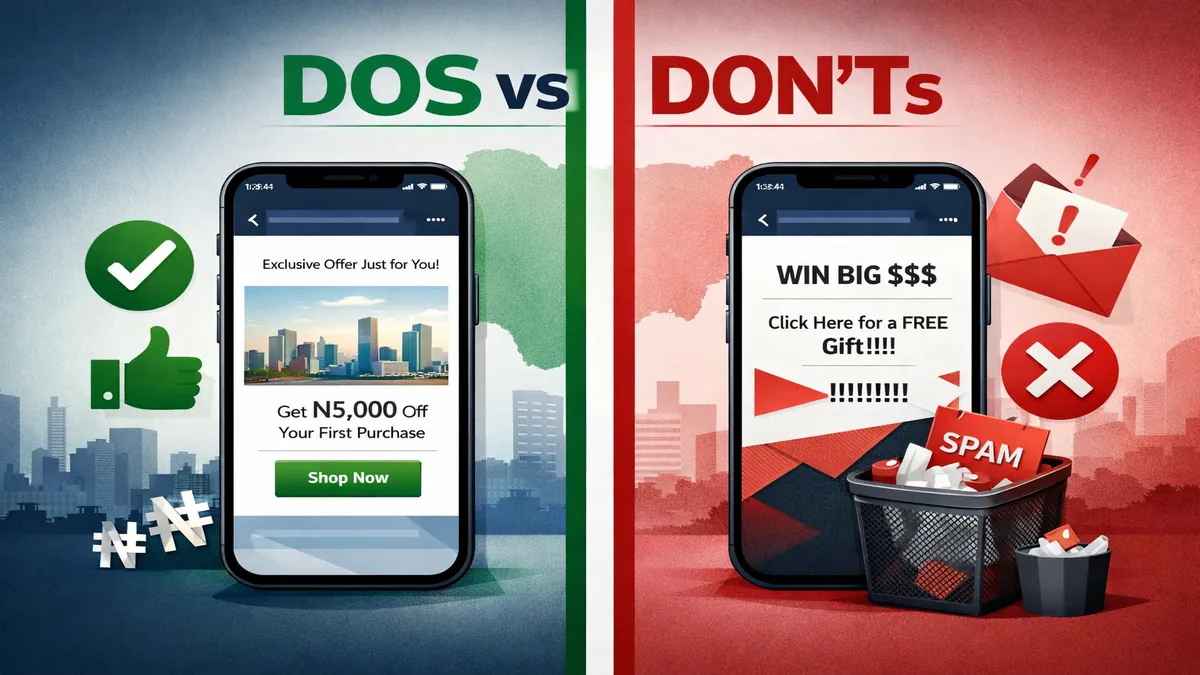
Avoid these pitfalls that can damage your email marketing success:
1. Buying Email Lists
Purchasing email lists might seem like a shortcut, but it’s a costly mistake.
These contacts haven’t given you permission to email them, leading to high spam complaints, low engagement rates, damage to your sender reputation, and potential legal issues under data protection laws.
2. Sending Too Many Emails
Bombarding subscribers with daily emails will cause them to unsubscribe. Nigerian consumers appreciate businesses that respect their inbox. Find a balanced frequency that keeps you top-of-mind without becoming annoying.
3. Ignoring Mobile Optimization
Since most Nigerians read emails on smartphones, using email templates that don’t display properly on mobile devices will hurt your results. Always preview emails on mobile before sending.
4. Generic, Impersonal Messages
Sending the same generic message to everyone on your list wastes the personalization power of email marketing. Segment your audience and tailor messages to different customer groups.
5. No Clear Call-to-Action
Every email should have a clear purpose. Whether you want recipients to shop now, read a blog post, or book a consultation, make the next step obvious with a prominent call-to-action button.
6. Neglecting Email List Hygiene
Keeping inactive subscribers who never open your emails damages your deliverability. Regularly clean your list by removing bounced addresses and unengaged contacts.
7. Poor Subject Lines
Your subject line determines whether people open your email. Vague or misleading subject lines result in low open rates. Craft compelling, honest subject lines that create curiosity or offer clear value.
Avoiding these mistakes requires expertise and experience. If you’re struggling to get results from email marketing, our team can audit your current strategy and show you exactly what needs to change.
Essential Email Marketing Metrics Nigerian Businesses Should Track
Understanding these key performance indicators helps you measure success:
Open Rate: The percentage of recipients who opened your email. A good open rate for Nigerian businesses typically ranges from 15-25%, though this varies by industry.
Click-Through Rate (CTR): The percentage of recipients who clicked a link in your email. This shows how engaging your content is.
Conversion Rate: The percentage of recipients who completed your desired action, such as making a purchase or filling out a form.
Bounce Rate: The percentage of emails that couldn’t be delivered. High bounce rates indicate list quality issues.
Unsubscribe Rate: The percentage of recipients who opted out. A sudden spike signals content or frequency problems.
List Growth Rate: How quickly your email list is growing. Healthy lists continuously attract new subscribers.
Getting Started with Email Marketing in Nigeria
Ready to launch your email marketing efforts? Follow these steps:
Choose an Email Marketing Platform
Select a service that fits your budget and needs. Popular options for Nigerian businesses include Mailchimp (free plan available), Sendinblue (affordable with SMS options), GetResponse (good automation features), and MailerLite (user-friendly for beginners).
Create a Lead Magnet
Offer something valuable in exchange for email addresses, such as a discount code, free e-book or guide, exclusive tips, early access to sales, or a free consultation.
Set Up Signup Forms
Place email collection forms on your website homepage, blog posts, checkout page, and social media profiles. Make the signup process simple with minimal required fields.
Plan Your Content Calendar
Decide what types of emails you’ll send and how often. A typical schedule might include a weekly newsletter, monthly promotional offers, and triggered emails for birthdays or abandoned carts.
Design Your First Campaign
Create a welcome email series for new subscribers. This first impression sets the tone for your relationship and typically generates the highest engagement.
Test and Optimize
Start small, track your results, and continuously improve based on what your Nigerian audience responds to best.
New to digital marketing? Email is just one piece of the puzzle. Discover how to combine email, social media, SEO, and content marketing for maximum growth. Explore Our Digital Marketing Services →
When Should Nigerian Businesses Hire an Email Marketing Consultant?
While email marketing is accessible for beginners, certain situations call for professional expertise. Consider hiring a specialist when:
Your Business Is Scaling
As your customer base grows beyond a few hundred contacts, managing email marketing becomes more complex. A professional can implement sophisticated automation and segmentation strategies.
You’re Not Seeing Results
If your emails have low open rates, poor click-through rates, or aren’t generating sales, an experienced consultant can diagnose problems and implement solutions.
You Lack Time or Technical Skills
Business owners juggling multiple responsibilities often struggle to execute consistent email campaigns. An email marketing expert handles strategy, design, copywriting, and analysis so you can focus on running your business.
You Need Advanced Strategies
Implementing marketing automation, behavioral triggers, complex segmentation, and A/B testing requires specialized knowledge that professionals bring to the table.
You’re Launching Major Campaigns
Product launches, seasonal promotions, or rebranding efforts benefit from professional planning and execution to maximize results.
If you’re looking for expert guidance, working with a professional email marketing consultant in Nigeria can transform your email efforts from basic broadcasts to revenue-generating campaigns. The right consultant understands the Nigerian market, consumer behavior, and local business challenges.
The Future of Email Marketing in Nigeria
Email marketing continues to evolve with new technologies and consumer expectations. Nigerian businesses should watch these trends:
Increased Automation: More sophisticated automated workflows will handle customer journeys with minimal manual intervention.
AI-Powered Personalization: Artificial intelligence will enable hyper-personalized content recommendations and send-time optimization.
Interactive Emails: Emails with embedded surveys, product carousels, and interactive elements will become more common as email clients support advanced features.
Privacy and Consent: Stricter data protection regulations will require Nigerian businesses to be more transparent about data collection and usage.
Integration with Other Channels: Email will work more seamlessly with social media, SMS, and WhatsApp for cohesive omnichannel marketing experiences.
Frequently Asked Questions About Email Marketing in Nigeria
Is email marketing still effective in Nigeria?
Yes, email marketing remains highly effective for Nigerian businesses. While social media gets more attention, email consistently delivers higher conversion rates and ROI. Nigerians check email regularly for banking updates, e-commerce confirmations, and professional communication, making it a valuable marketing channel.
How much does email marketing cost in Nigeria?
Email marketing is one of the most affordable marketing channels. Many platforms offer free plans for up to 500-2,000 subscribers. Paid plans typically range from ₦3,000 to ₦50,000 monthly depending on your list size and features needed. The actual cost is minimal compared to traditional advertising methods.
Can I use WhatsApp instead of email marketing?
WhatsApp and email serve different purposes. WhatsApp works well for quick updates and customer service, but email is better for detailed newsletters, professional communications, promotional campaigns, and building long-term customer relationships. Most successful Nigerian businesses use both channels strategically.
How do I get people to subscribe to my email list?
Offer clear value in exchange for email addresses. This could be exclusive discounts, helpful resources, early access to sales, or valuable content. Place signup forms prominently on your website and promote your newsletter on social media. Make the signup process quick and easy with minimal required information.
What’s a good email marketing open rate in Nigeria?
Open rates vary by industry, but Nigerian businesses typically see open rates between 15-25%. Financial services and B2B companies often achieve higher rates (25-30%), while retail and e-commerce might see 15-20%. Focus on improving your own baseline rather than obsessing over industry benchmarks.
Do I need a website to do email marketing?
While having a website makes email marketing easier, it’s not absolutely required. You can collect emails through social media, in-store signup sheets, or events, and send campaigns using any email marketing platform. However, a website with signup forms significantly improves your ability to grow your list.
How often should Nigerian businesses send marketing emails?
There’s no one-size-fits-all answer, but most Nigerian businesses find success with weekly or bi-weekly emails. Test different frequencies with your audience. The key is consistency and value. It’s better to send one valuable email monthly than four irrelevant emails that annoy subscribers.
Is email marketing legal in Nigeria?
Yes, email marketing is legal in Nigeria, but you must follow best practices. Only email people who have given permission (opted in), include an unsubscribe link in every email, honor unsubscribe requests promptly, and be transparent about how you’ll use email addresses. The Nigeria Data Protection Regulation (NDPR) governs data handling.
Final Thoughts: Email Marketing as a Growth Tool for Nigerian Businesses
Email marketing represents one of the most powerful, cost-effective tools available to Nigerian businesses today. Whether you’re a startup in Lagos, an SME in Abuja, or an established company in Port Harcourt, email marketing can help you build stronger customer relationships, increase sales, and grow your brand.
The key is to start simple, focus on providing genuine value to your subscribers, and continuously learn from your results. Remember that email marketing is a marathon, not a sprint. Consistent, valuable communication over time builds the trust and loyalty that turns subscribers into customers and customers into advocates.
If you’re ready to take your marketing to the next level but need expert guidance, consider working with a professional who understands the Nigerian market. As a digital marketing consultant in Nigeria, Yorochim Apex helps businesses implement email marketing strategies that drive real results, combining international best practices with deep knowledge of Nigerian consumer behavior.
Start building your email list today, and you’ll create a valuable business asset that grows more powerful with every subscriber who joins.
Ready to harness the power of email marketing for your Nigerian business? The time to start is now.